Day 1: Hot gene knockdown action (video clip)
At the end of day one, Alan’s and Alex’s cells make it to the safety of the incubator. What will happen on Friday?
Comments Off on Day 1: Hot gene knockdown action (video clip)
At the end of day one, Alan’s and Alex’s cells make it to the safety of the incubator. What will happen on Friday?
Just like in the films.
(There’s one more vid of day 1 to come, then I need to process and upload the rest of the video. There’s a lot!)
Jenny shows Alex and Alan how it’s done… and then they have a go.
Alan and Alex’s first day in the lab:
(See more on YouTube!)

As seen in a shop window in Salida, Colorado
Who stole our graduate student trainees?

They were last seen huddled around the teaching lab bench, learning how to extract genomic DNA. Next thing we know, they’d vanished without a trace, leaving only their white coats behind.
I haven’t noticed any other riders of the Apocalypse recently, but there have been a few more Drosophila than usual crawling around the lab.
Does that count?
In the wake of the world cup I have been indulging myself with Jonathan Wilson’s wonderful book “Inverting the Pyramid”. I am far from the first to praise it, but nevertheless feel that I should do so here in case anyone might be missing out.
I came late to football. I grew up in England in the seventies and eighties, and for every day in late spring when I watched the coverage of the FA cup final from start to finish, there were ten when the news was made by the thugs and hooligans who saw the sport as simply an excuse for violence. What was worse, I was a weedy asthmatic child blessed with all the coordination of a beetle on its back, with Parkinson’s. I was also among the youngest in my year at school, and with a father who never saw any sport as being worthy of his attention. So I was never going to be a star in the playground. In the idiotic manner of school sports, I found myself again and again playing in goal, on frozen winter days on a full size pitch, watching my school mates far away chasing the ball like a shoal of fish incompetently gulping at a chunk of bread. And all this was in Cornwall, where it is fair to say the opportunities to see the game at the highest level were limited.
The change came years later when I was doing my PhD in London. I found myself in pubs with the game on, and my eyes were drawn to it. Then, one morning I was making myself breakfast when I realised, with something of a shock, that the first thing to enter my head upon awakening for the last two weeks, was Arsenal.
There was no intent. No eagerness to join the great middle class football revolution of the nineties. It just happened, and I didn’t know what to do with myself for a while. Until I began to scratch the itch, and deliberately go to watch games first in the pub, then at Highbury. I was hooked.
About ten years later, this culminated in a conversation with my wife, who declared one day, “You think you’re an intellectual, but you’re not.”
I wanted to know why not. I pointed to my job on the lower rungs of academia, my subscriptions to the London and New York Reviews of Books. Why was I not an intellectual? Her answer was direct
“Because you spend almost every spare moment you have watching, playing, or thinking about football.”
And she was right.
But being the pretend intellectual I am, one of the greatest pleasures I have is the analysis of the game. I delight in noticing the tactical flaws in Maradona’s plan for Argentina which saw them overrun by Germany (they left them way too much space in wide positions to run into, and then surrendered possession and invited them to do so. Spain contrastingly made possession their sine qua non). This is why Wilson’s book is such a joy: he writes about football as if it were both an art and a science.
Let me share one small part of it. Statistics have become increasingly important to the game in recent times, and OPTA provides a wealth of them. But such perspectives have a history. Between 1953 and 1957 the head of the Royal Statistical Society and an RAF officer by the name of Charles Reep gathered data, mainly from English league matches, which they claimed demonstrated conclusively that direct play was the way to score goals. English football was already suspicious of any player with technical ability, and this supported that prejudice. They found that ‘only five percent of all moves consist of four or more received passes and only one percent of six or more’.
As Wilson goes on to point out ‘common does not necessarily equal good… Given long chains of passes were rare, it is hardly surprising so few goals resulted from them.’
And he doesn’t let it go there.‘Reep himself claimed that ‘only two goals out of nine came from moves which included more than three received passes’ (so seven out of nine, 77.8 per cent, came from moves of three or fewer) … If, as those figures suggest, roughly 80 percent of goals result from moves of three received passes or fewer, but 91.5 percent of moves consist of three received passes or fewer, then it surely follows … that moves of three passes or fewer are less effective than those of four or more … Anti-intellectualism is one thing, but faith in wrong-headed pseudo-intellectualism is far worse’.
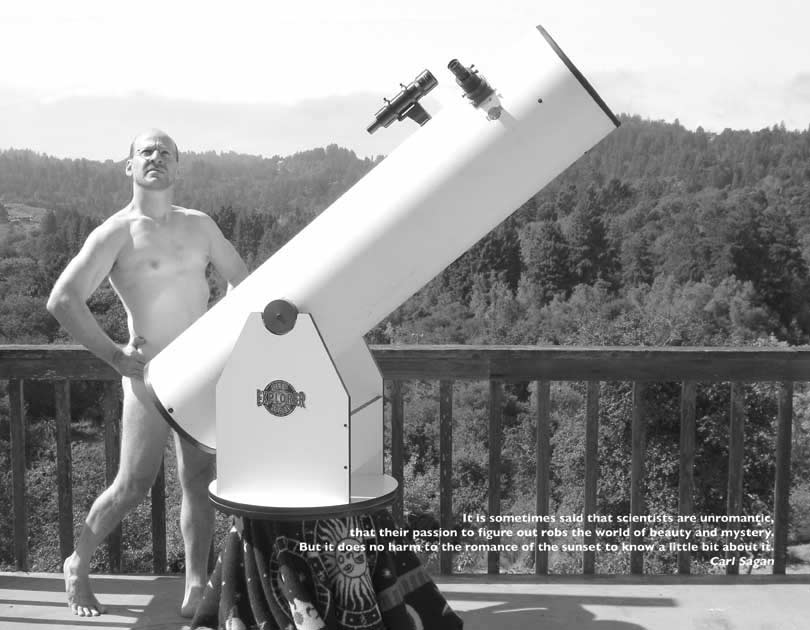
Ex-ACT-ly! I found myself singing when I read this. Wilson’s writing makes me think of Carl Sagan’s comment that “It does no harm to the romance of the sunset to know a little about it”. And knowing more, as I do now, about football, it only means I am awaiting Barnet and the start of pre season on Saturday even more eagerly than I was before. I am only sad that I am now on the other side of the Atlantic, and so will miss out on the company of my fellow fans, who are among the best people I ever met.

Exhibiting a scientist's flair for multitasking at his leaving do
Our very own Bill has gone off on a great adventure, choosing to become a new professor in an uber-prestigious American university over a more familiar one here in London. We are all absurdly proud of him, wish him well – and hope that once he settles into his strange new environment, he will report back with his usual insight.
The change makes me think, yet again, about the differences between doing science in America versus Europe/the UK. It’s been nearly 14 years since I left Seattle to become a scientist in London. I have been here so long that I only have vague memories of what it used to be like when constant 80-hour weeks were the done thing. The lab turbo-gunner phenotype turns out to have strong environmental components – for better or worse, my lab work ethic is now firmly aligned with what people here would call the “Continental” mode (and what the professors where I did my PhD would call “slacker” mode).
Bill recently sent me a glowing review of the novel Intuition by Allegra Goodman for publication on LabLit.com, although in an email aside said he had been disappointed by the author’s portrayal of the scientists as working all through the night and subsisting on vending machine snacks, which he found stereotypical. This makes me slightly nervous, for the university where Bill has just hung his hat is renowned, amongst American scientists, for precisely that mentality. My hope is that this behavior is more expected of the students and post-docs than of the lab heads!
Today we have the first of several comics from regular LabLit author Nik Papageorgiou, taking a humorous look at his PhD and thesis experiences.
I’m assured they’re only semi-autobiographical.